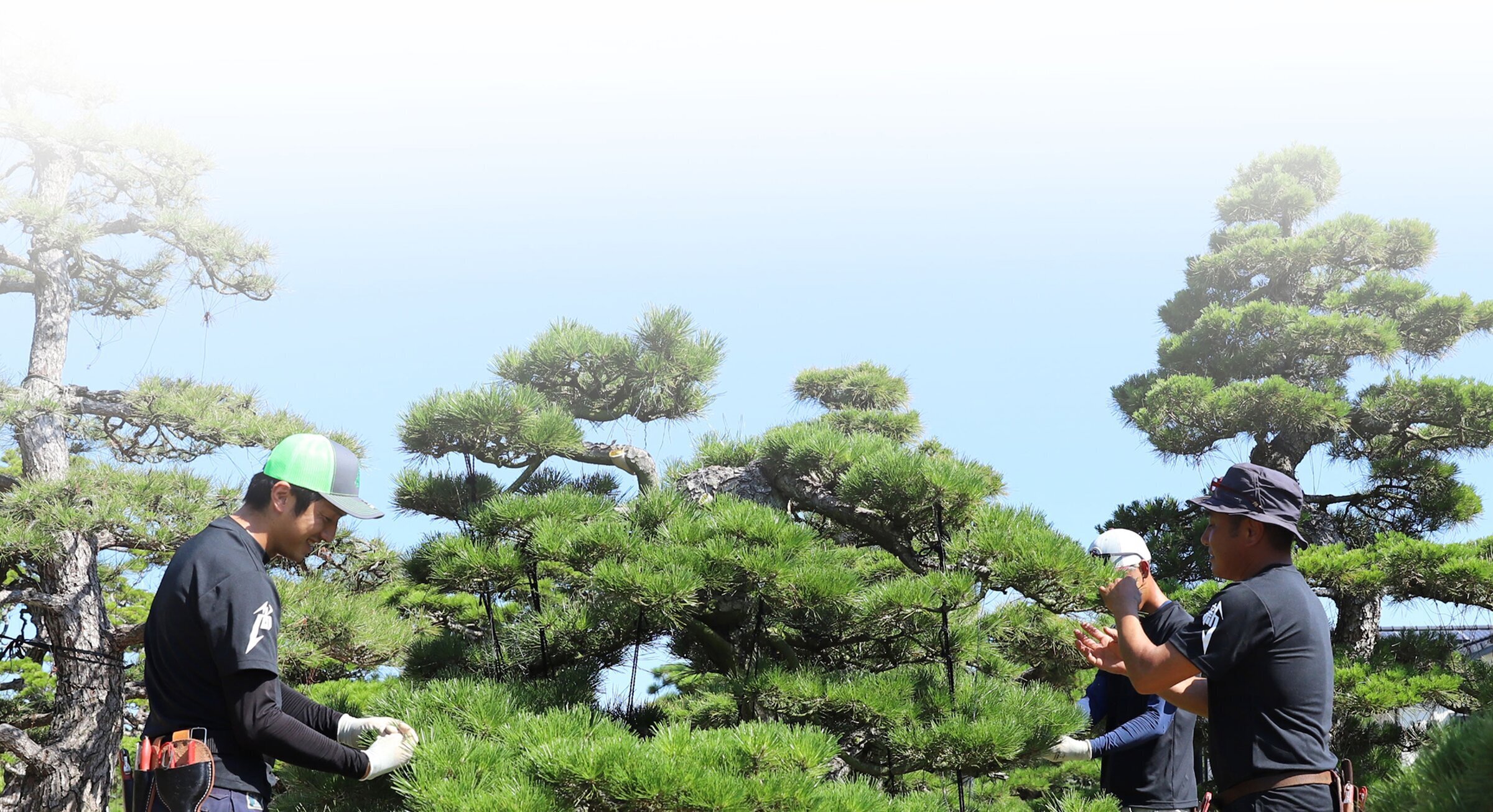
——— How to Grow Black Pine
黒松の育て方
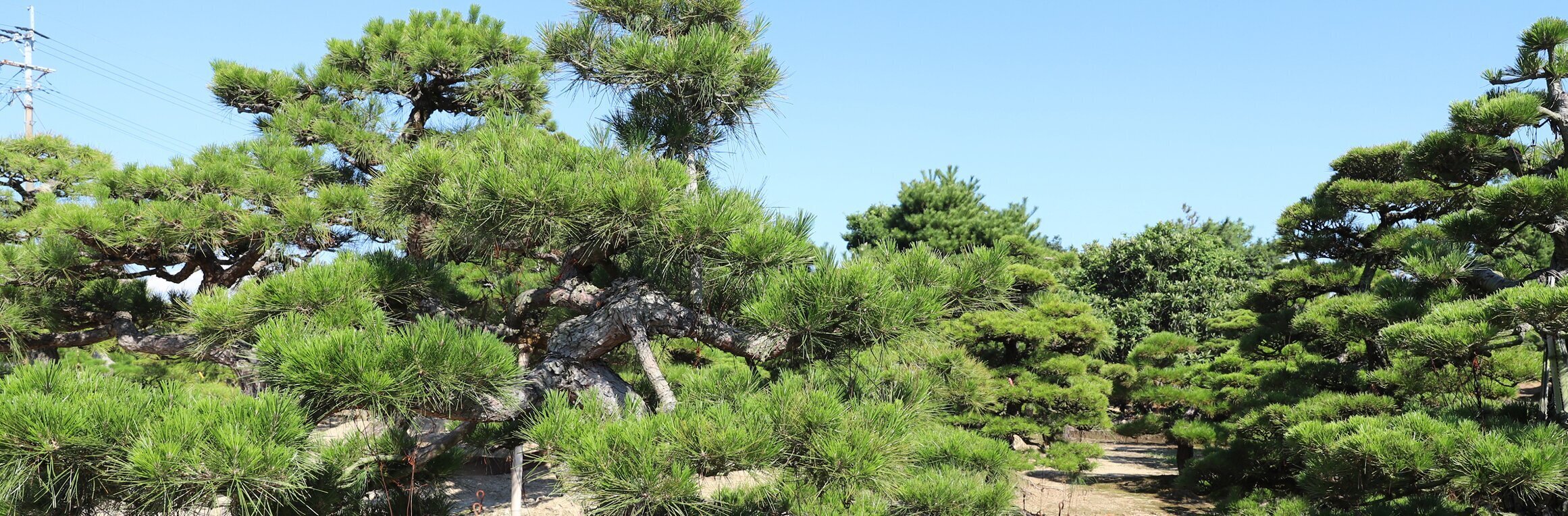
Kuromatsu (Japanese black pine) is a tree that is loved not only in Japan but also around the world for its use in Japanese gardens and bonsai. It is resistant to dryness and salt damage, and has the strength to take firm roots even in harsh or sandy soils.
Pest and disease prevention
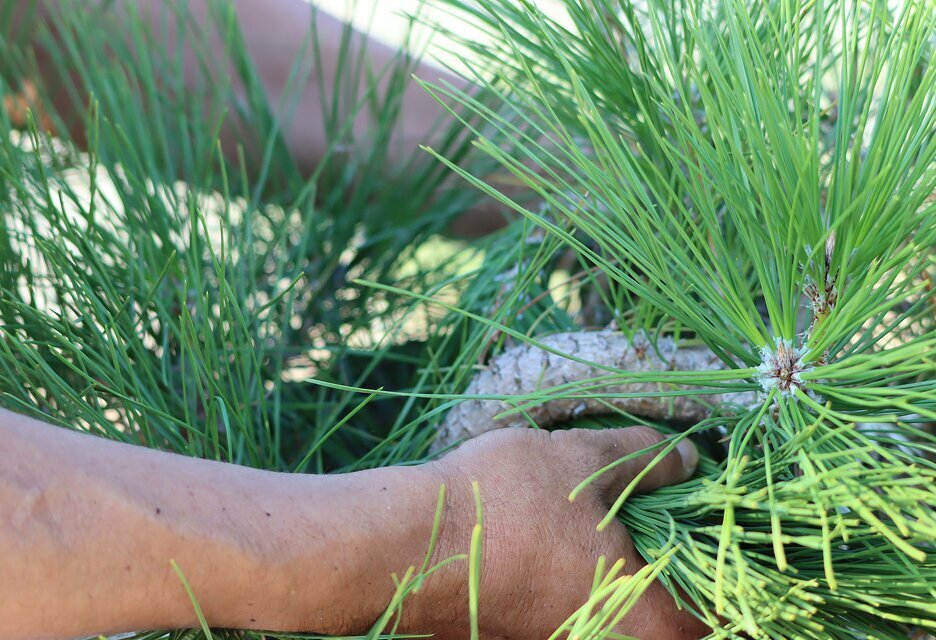
Regular disinfection can help prevent pests and diseases. It you see strange colors or smells, give the leaves and trunk a once-over to detect and eliminate pests early. Be sure to observe and disinfect regularly to prevent damage from spreading.
Watering
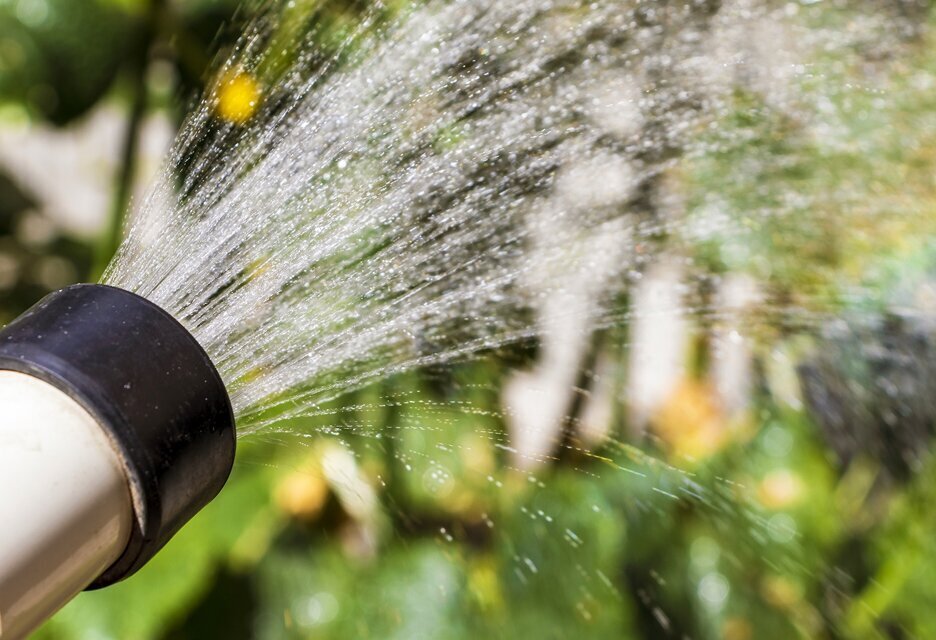
Black pine trees have roots that go deep into the ground, so they rarely need watering. However, regular watering is necessary for the first 1-2 years after planting until the roots have spread.
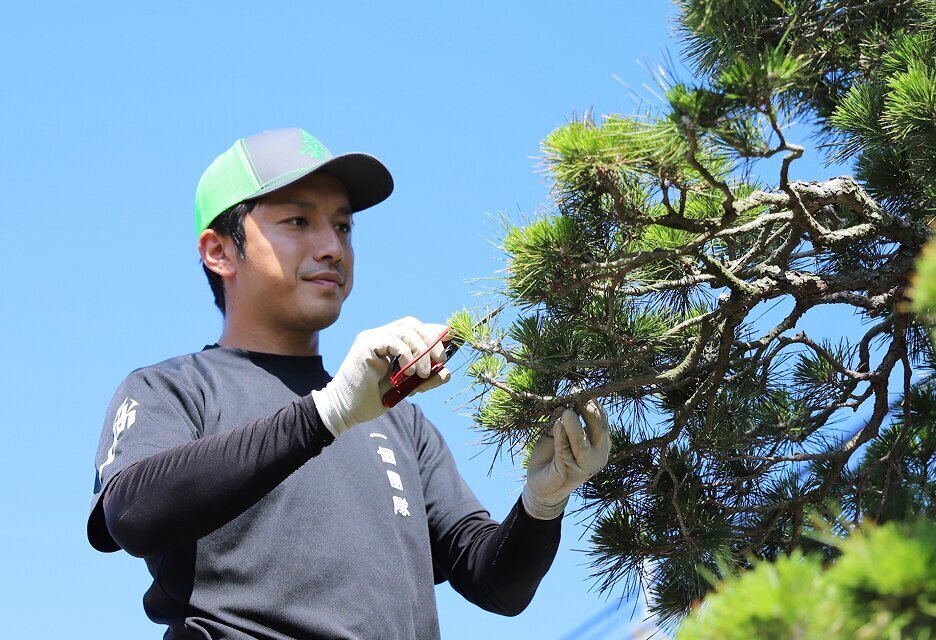
Pruning
Kuromatsu (Japanese black pine) requires diligent care, because its leaves will turn brown and die if they are not exposed to sunlight.
Pruning twice a year will keep it looking beautiful.

Black Pine and Red Pine
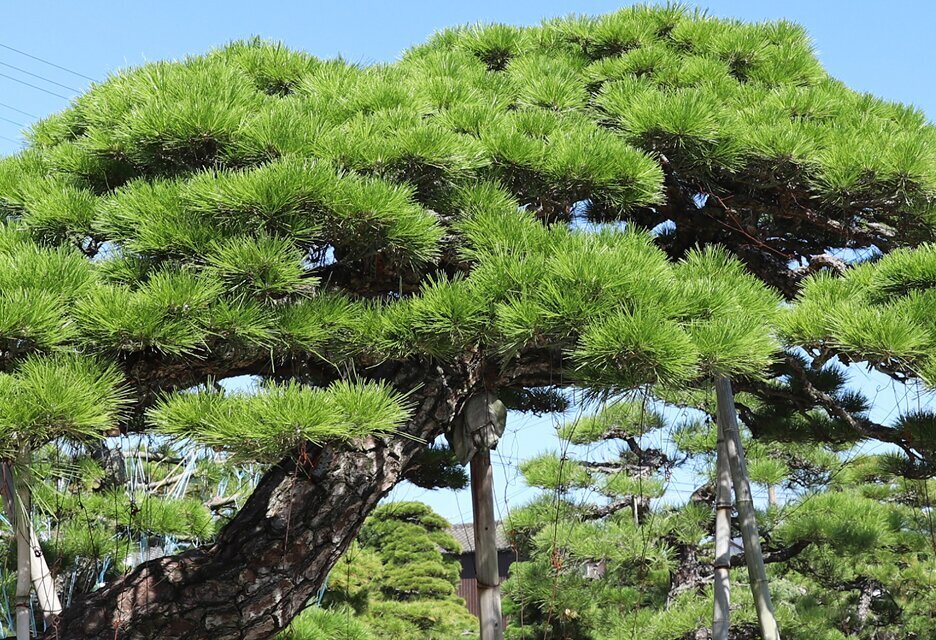
Kuromatsu (Japanese black pine)
Kuromatsu is characterized by its dark bark and powerful, spreading branches, and is also known as Otokomatsu (male pine).
Its vitality is strong and is an auspicious tree that symbolizes longevity and prosperity, making it extremely popular as a bonsai or garden tree.
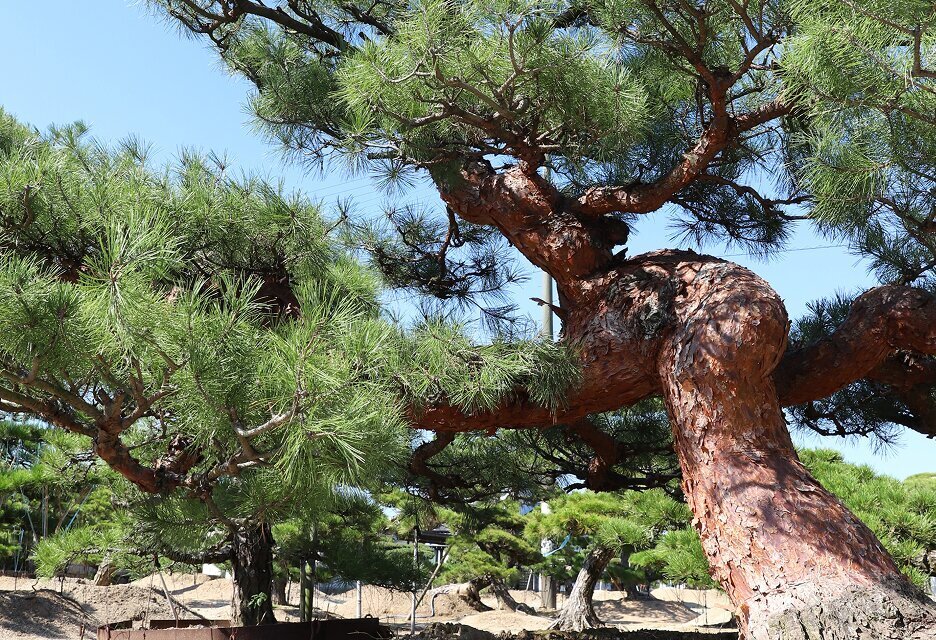
Akamatsu (Japanese red pine)
The characteristics of Akamatsu (Japanese red pine) are that its bark is thin and peels easily, its surface is reddish in color, and it blooms red flowers.
It is also called Onnamatsu or Mematsu (both meaning “female pine”) because it has soft needles that are not as prickly to the touch as those of Kuromatsu (Japanese black pine).
Kuromatsu (Japanese black pine) adapt easily to natural environments, but you can help your trees to be healthy and beautiful by maintaining the surrounding environment through pruning and disinfection.
At Ohtsu Shorakuen, we also provide regular maintenance, including health management and pest control. Please feel free to contact us.